

Freight brokers don’t lose business because they can’t move freight — they lose it because they can’t clear shipper onboarding fast enough. One document often decides whether loads move or stall: the Certificate of Insurance (COI).
For freight brokers, a COI proves that the right freight broker insurance, including contingent cargo insurance, is in place to meet shipper, 3PL, and warehouse requirements. This guide explains COI requirements for freight brokers, what shippers typically expect to see, and how a broker-focused agency like NewArk Agency helps keep you COI-ready.
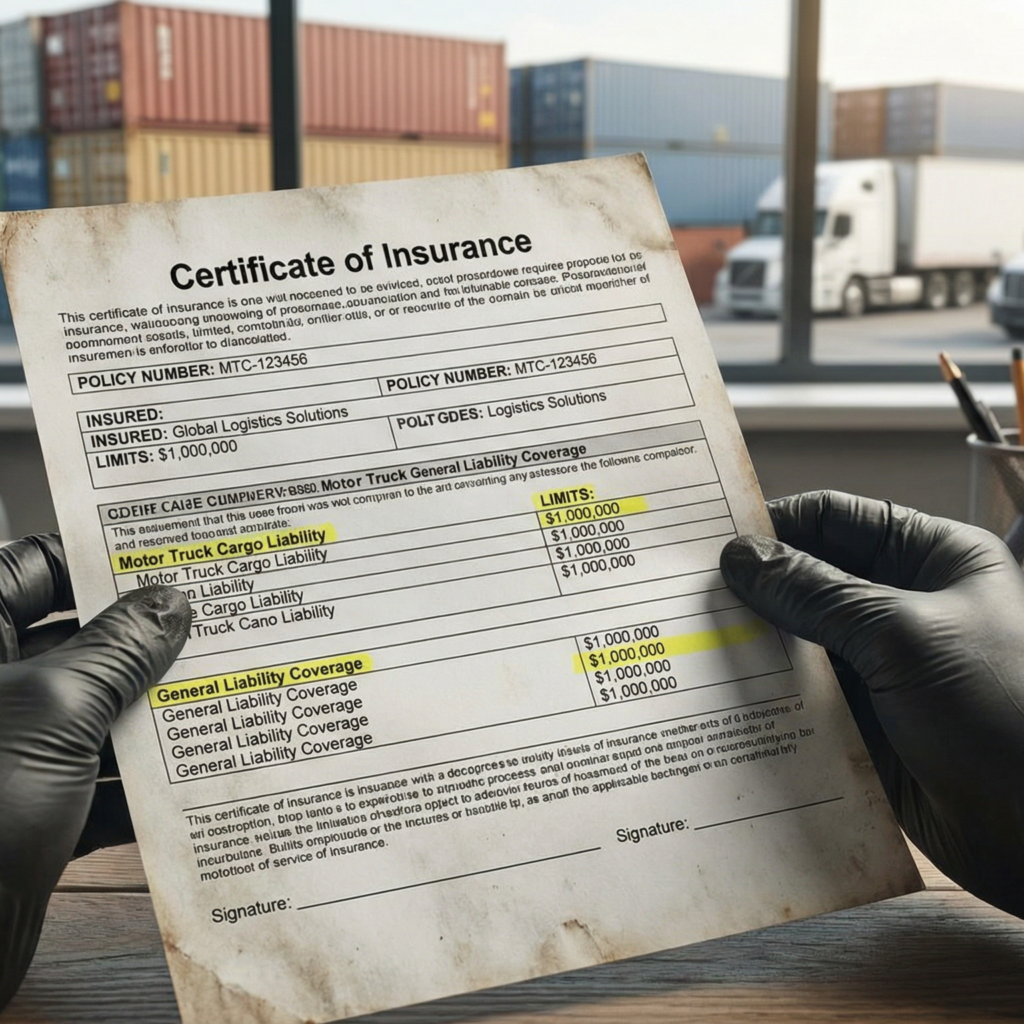
What Is a Certificate of Insurance (COI) for Freight Brokers?
A Certificate of Insurance (COI) is a one-page summary of your active insurance policies. It shows coverage types, limits, policy periods, and insurers. Shippers request a COI to confirm you meet their vendor requirements before freight is tendered — especially for higher-value or time-sensitive loads.
Most COI requests for freight brokers include:
Commercial General Liability (GL)
Contingent Cargo Insurance (broker-specific cargo protection)
Contingent Auto Liability (when contracts require it)
Sometimes Errors & Omissions (E&O) / Professional Liability
For many customers, the COI is a strict go / no-go checklist, not a formality. Incorrect or incomplete certificates delay onboarding and cost brokers revenue.

Do Freight Brokers Need Insurance Beyond the $75,000 Bond?
Federal requirement: Freight brokers must file a $75,000 surety bond or trust (FMCSA BMC-84 / BMC-85). This bond is mandatory — but it is not insurance.
Real-world requirement: Shippers, 3PLs, and distribution centers usually require insurance proof to onboard a broker. Without acceptable insurance shown on a COI, many shippers simply will not release freight.
This is why freight brokers need contingent coverage. Even when a carrier should pay a cargo claim, brokers can still face:
Contractual liability
Claim pressure from shippers
Coverage disputes or exclusions
Delays that disrupt operations
Insurance is what keeps brokers competitive and contract-ready.

What Is Contingent Cargo Insurance (and Why It Appears on COIs)
Contingent cargo insurance is designed for freight brokers when cargo is lost, stolen, or damaged and the motor carrier’s cargo policy does not respond — or does not respond as expected.
Shippers often request contingent cargo coverage because it helps reduce gaps caused by:
Carrier policy exclusions
Insufficient cargo limits
Disputes over liability
Carrier insolvency or slow claims handling
When evaluating the best cargo insurance for freight brokers, focus on how the policy triggers, its exclusions, and whether its limits match your freight profile — not just what looks good on a certificate.
Cargo Insurance Alternatives Brokers Should Understand
Some customers request additional protection beyond contingent cargo insurance. These options usually complement, not replace, contingent coverage:
Higher carrier cargo limits for specific commodities or lanes
Shipper-controlled cargo programs (e.g., stock throughput)
Shipment-specific coverage for unusually high-value freight
Strong carrier vetting and contract controls
These measures reduce risk but do not eliminate the need for broker insurance when claims escalate.

What Is Contingent Auto Liability Insurance for Freight Brokers?
Contingent auto liability protects the broker if they are named in an auto accident claim involving a carrier’s truck. Claims often allege negligent selection, hiring, or vicarious liability.
Shippers may require this coverage because severe auto claims can involve significant defense and settlement costs. Even when a carrier has its own auto liability policy, brokers may still need protection.
Policy wording matters — especially how defense costs and triggers are handled.

How Much Insurance Do Freight Brokers Need for COI Approval?
Coverage limits vary by shipper, commodity, and cargo value, but COI requests often fall into predictable ranges.
Common starting points (varies by contract):
General Liability: $1M per occurrence (often higher with umbrella)
Contingent Cargo: $100,000 to $250,000 (higher for high-value freight)
Contingent Auto Liability: $1M (umbrella sometimes required)
Umbrella / Excess: $2M–$5M+ when requested

COI Checklist for Freight Brokers (Avoid Onboarding Delays)
Before submitting a COI, confirm:
Correct legal entity name (not just a DBA)
Accurate certificate holder name and address
Coverage types and limits match the contract
Active effective and expiration dates
Required endorsements are actually issued (not just typed into COI notes):
Additional Insured
Waiver of Subrogation
Primary & Noncontributory
This is where a broker-focused agency adds value — keeping certificates accurate so onboarding doesn’t stall when you’re ready to book freight.
Where NewArk Agency Fits
NewArk Agency is a Chicago-based insurance provider specializing in contingent cargo insurance for freight brokers. The team works daily with brokers navigating shipper onboarding, COI compliance, and coverage questions.
If your goal is fewer onboarding delays and clear answers about what your COI actually proves, explore NewArk Agency’s broker-focused insurance solutions.
📞 Chicago brokers: +1 312-248-0017 🌐 Website: www.newarkagency.com