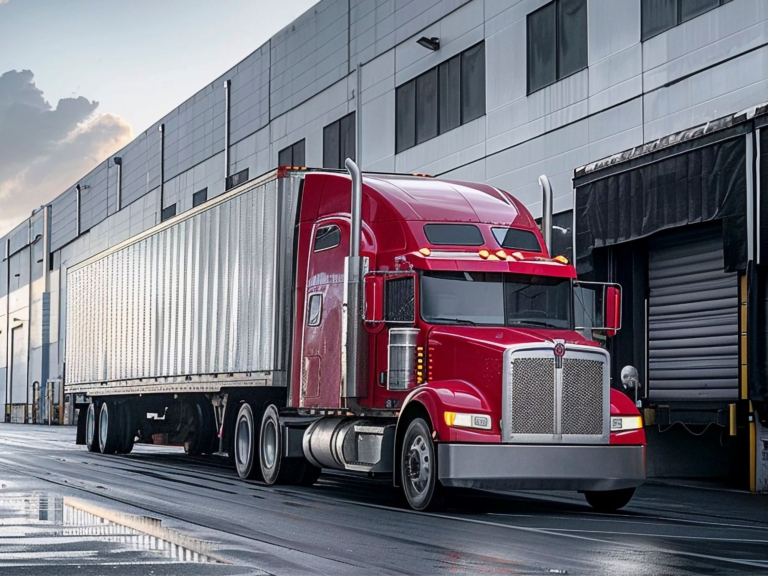
The New Reality of Freight Risk in the US Market
At NewArk Agency, we understand that freight brokerage has always involved significant risks, but 2024 has brought even higher stakes. Cargo thefts in North America have increased by 27% compared to last year, reaching a record 3,625 incidents, according to Verisk CargoNet. This highlights a larger issue: the freight industry is becoming more unpredictable, complex, and harsh for those who ignore the need for insurance.
The change is clear — contingent cargo insurance for freight brokers is now a must-have, not just an option.
Enterprise shippers now refuse to sign contracts with brokers who can't prove they have solid risk protection. Procurement teams regularly check our carrier vetting processes, insurance certificates, and coverage limits before giving out high-value freight lanes. What used to be an adequate carrier policy no longer meets these strict standards. Gaps in coverage, policy exclusions, and expired carrier certificates are risks that knowledgeable shippers avoid.
Brokers who win the best contracts today understand a key fact: strong coverage isn't just about protection — it's a business advantage. Building a reputation for excellent risk management attracts the right enterprise accounts.
Understanding how this protection works — and where carrier-primary policies often fall short — is crucial.
What is Contingent Cargo Insurance? (And Why 'Primary' Isn't Enough)
As cargo theft losses rise and claim values increase, knowing what our freight broker insurance coverage actually protects is essential. The difference between primary and contingent cargo insurance is where many brokers face big challenges.
Primary cargo insurance is the carrier's policy — one they must legally have. On paper, it seems to offer enough protection. In reality, it has more loopholes than a highway interchange.
Where Primary Coverage Fails
Carriers' primary policies often deny claims under conditions that are common in daily operations:
- Unattended vehicle exclusions — cargo stolen from a parked truck overnight might not be covered
- Restricted commodities — electronics, pharmaceuticals, and high-value goods are often excluded
- Lapsed or insufficient coverage — a carrier's policy might have expired, or limits may be well below the load's value
The last point is particularly worrying. According to Verisk CargoNet, the average value of stolen cargo per incident reached $202,364 in 2024 — a 7.7% increase from last year — often exceeding standard carrier limits of $100,000.
The Secondary Layer That Truly Protects Us
Contingent cargo insurance steps in precisely when the carrier's primary policy fails or denies a claim. Think of it as our brokerage's safety net — it doesn't replace primary coverage, it covers what slips through the gaps.
| Feature | Primary Carrier Policy | Contingent Cargo Insurance |
|---|---|---|
| Who holds the policy | Carrier | Freight broker |
| Triggered by | Any covered loss | Primary policy failure or denial |
| Covers lapsed carrier coverage | No | Yes |
| Protects broker's liability | No | Yes |
| Commodity exclusion risk | High | Significantly reduced |
Contingent cargo insurance isn't just a luxury — it's the difference between absorbing a $200,000+ loss ourselves and transferring that risk to where it belongs.
This gap in primary coverage isn't just a financial issue. As the legal landscape around broker liability continues to change, that gap is becoming a courtroom argument — and the courts are taking notice.
The Legal Catalyst: Why the Courts Are Targeting Brokers
Understanding what contingent cargo insurance is remains more important today than ever — mainly because the legal ground beneath freight brokers, including us at NewArk Agency, has shifted. In 2024, the U.S. Supreme Court's decision in Montgomery v. Caribe Transport removed one of the industry's most relied-upon legal protections: federal preemption under the Carmack Amendment and the FAAAA.
For years, brokers, including our team, argued that federal law overruled state-level negligence claims. That argument is now effectively gone. The Court's decision confirmed that shippers and plaintiffs can pursue brokers under state-law negligence theories — specifically targeting carrier selection and vetting decisions. That changes everything.
"Carrier selection is no longer just an operational decision — it's a multi-million dollar liability exposure that plaintiff attorneys are actively targeting."
In practice, if we assign a load to a carrier that later causes an accident, theft, or cargo loss, we can be sued for negligent hiring. With nuclear verdicts — jury awards exceeding $10 million — becoming more common in trucking lawsuits, the financial exposure is severe.
This isn't a hypothetical risk. It's a courtroom reality. Brokers who lack the right coverage structure now face direct personal liability when a carrier's policy falls short or lapses entirely.
The legal environment isn't getting easier. As shippers become more aware of these rulings, many are starting to require proof of strong broker-side coverage before awarding contracts. This brings us to a crucial question: how does the right insurance policy become a competitive advantage, not just a compliance checkbox?
Strategic Growth: Using Insurance to Win Enterprise Shippers
The legal exposure mentioned earlier is just one part of the story. Cargo insurance for freight brokers, like us at NewArk Agency, isn't only a defensive shield — it's a proactive business development tool that opens doors to higher-value contracts and longer-term shipper relationships.
Compliance: Our Pre-Qualification Badge for Enterprise Accounts
Fortune 500 procurement teams don't just prefer insured brokers — they require them. A contingent cargo policy shows that our operation meets enterprise-grade standards before any conversation begins.
As Logistic Insurance Solutions notes, "more shippers are requiring their freight brokers to carry contingent cargo policies to ensure the protection of their goods." That shift means brokers without coverage are quietly disqualified before they even submit a bid.
- Automatically meets standard shipper vendor requirements
- Reduces back-and-forth during RFP vetting
- Positions our brokerage as audit-ready from day one
Speed: Rapid COI Issuance as a Competitive Edge
When a shipper asks for proof of coverage, response time matters. Brokers who can issue certificates quickly close faster than competitors still dealing with manual processes.
- Same-day certificate of insurance (COI) delivery
- Fewer onboarding delays for new shipper accounts
- Consistent documentation that satisfies multiple shipper formats
Trust: The Psychological Advantage That Closes Deals
Shippers aren't just buying capacity — they're buying confidence. Knowing their goods are protected regardless of carrier failure removes a major psychological barrier to committing long-term volume to our brokerage.
- Repeat business from shippers who feel genuinely protected
- Stronger negotiating position on rate and lane exclusivity
- Referrals driven by reputation for professional risk management
Contingent cargo coverage doesn't just protect our balance sheet — it becomes part of our pitch. The question worth exploring next is whether the cost of that protection actually delivers a measurable return on investment.
Cost vs. Risk: The ROI of Bundled Contingent Coverage
Winning enterprise shippers is one part of the equation — but protecting our margins when something goes wrong is equally critical. Contingent cargo liability insurance is most valuable when we understand the full financial picture: what a single claim actually costs, and how smart bundling keeps overhead manageable.
The Hidden Costs of One Cargo Claim
A single disputed shipment can trigger expenses far beyond the cargo value itself:
- Legal defense fees — even frivolous claims can cost $15,000–$40,000 to defend
- Deductible spikes — carriers' insurers pushing liability back to our brokerage can leave us absorbing costs we didn't anticipate
- Reputational damage — losing an enterprise account after a claim incident can eliminate far more revenue than the claim itself
Brokers often focus on the cargo value and underestimate the wider financial exposure around it.
Why Bundling Changes the Math
Purchasing General Liability, Auto Liability, and contingent cargo coverage as separate policies creates billing redundancy, coverage gaps, and higher total premiums. A bundled approach consolidates protection under a coordinated structure — carriers, shippers, and regulators all receive consistent documentation, and brokers avoid the administrative hassle of managing multiple renewal cycles.
Tiered Pricing for Every Stage
Enterprise-grade protection doesn't need an enterprise-sized budget. NewArk Agency offers tiered insurance bundles with annual premiums starting at $865 for $1M in limits — a threshold that meets most shipper requirements from the start. Startups can scale coverage as freight volume grows, making compliance and credibility accessible at every stage of a brokerage's development.
The numbers make it clear: proactive coverage costs a fraction of a single defended claim.
Key Takeaways
- Unattended vehicle exclusions — cargo stolen from a parked truck overnight may not be covered
- Restricted commodities — electronics, pharmaceuticals, and high-value goods are often excluded
- Lapsed or insufficient coverage — a carrier's policy might have expired, or limits may be well below the load's value
- Automatically meets standard shipper vendor requirements
- Reduces back-and-forth during RFP vetting
Conclusion: Securing Our Brokerage's Future
Contingent cargo insurance isn't just a checkbox — it's the essential foundation that links small-scale freight operations with genuine enterprise growth. Throughout this article, the pattern is clear: brokers who treat coverage as a strategic asset consistently outperform those who view it as a mere compliance cost.
The freight industry has changed significantly over the past 25 years, and the role of freight insurance for brokers has evolved with it. Shipper expectations are higher, cargo values are greater, and the liability landscape is more complex than ever. Choosing a specialist agency like NewArk Agency, which truly understands this evolution — not a generalist that treats logistics as just another commercial account — makes a measurable difference in both coverage quality and operational speed.
Protecting our margins while maintaining compliance requires both the right policy and the right partner. In practice, that means working with a team that handles rapid COI requests, offers transparent pricing, and keeps our brokerage competitive without bureaucratic delays. NewArk Agency specializes in exactly that combination, designed for freight brokers navigating today's demanding market.
Ready to move from reactive to strategic? Start your coverage application today and put contingent cargo insurance to work as the growth engine our brokerage deserves.
